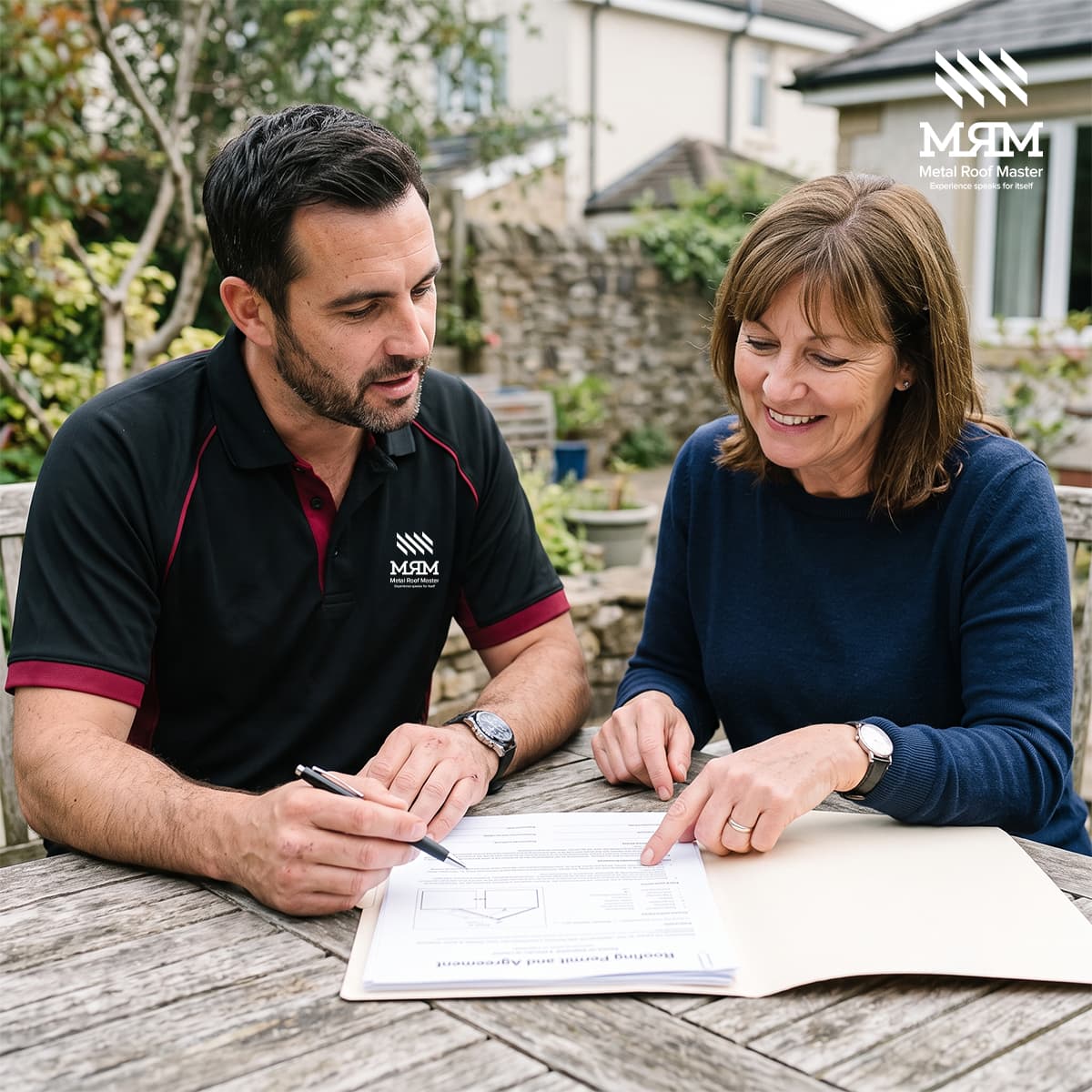
Metal roofing's relationship with homeowner's insurance is often summarized as a simple discount, but the actual answer depends on your specific carrier, your roof's documentation, and the wind-mitigation credits your state and insurer recognize. This isn't a substitute for advice from your insurance agent or a licensed insurance professional — it's a guide to the right questions to bring to that conversation.
Why Metal Roofs Can Affect Insurance Pricing at All
Insurance premiums for wind and hurricane coverage are calculated partly around a property's expected wind-related loss risk, and roof material and rating are a recognized input into that calculation.
● Florida's wind-mitigation inspection program evaluates specific roof characteristics — roof covering type, roof deck attachment, roof-to-wall connections, and secondary water resistance, among others — and ties documented features to premium credits
● A properly installed, code-compliant, wind-rated metal roofing system can qualify for credits under several of these categories, depending on the specific installation details
● The discount isn't automatic simply because the roof is metal — it depends on documentation showing the specific wind-mitigation features actually present in the installation
The Wind-Mitigation Inspection Is the Key Document
For Florida homeowners specifically, a wind-mitigation inspection report is generally the document that actually drives any insurance premium adjustment tied to roofing.
● This inspection is typically performed by a licensed inspector and documents specific construction features of the home, not just the general fact that the roof is metal
● Carriers use this report's findings to apply premium credits under Florida's standardized wind-mitigation credit categories
● Homeowners who've had roofing work done should confirm whether a new wind-mitigation inspection is needed to reflect the updated roof in their insurance file — an old inspection reflecting a prior roof won't automatically update itself
Questions to Ask Your Insurance Carrier Directly
Rather than assuming a specific discount amount, bring these questions to your agent or carrier once your roofing project is complete.
● Ask specifically which wind-mitigation credit categories your new roof qualifies for, and what documentation (NOA number, installation certification, wind-mitigation inspection) they need to apply them
● Ask whether your policy recognizes a difference between roof covering type alone versus the full documented wind-mitigation package (deck attachment, roof-to-wall connections, secondary water resistance) — some savings come from features beyond the panel material itself
● Ask how the discount, if any, compares against your previous roof's rating, since the actual dollar impact depends on your specific policy's baseline
How NOA and Product Approval Documentation Factors In
For Miami-Dade and Broward properties, the Notice of Acceptance (NOA) documentation tied to your specific installed roofing product is often the reference point carriers and inspectors look to first.
● Keeping your NOA documentation, along with your contractor's completion paperwork, on file makes it straightforward to provide whatever your carrier requests when updating your policy
● A wind-mitigation inspector will generally reference the specific product's approval documentation when confirming roof covering type and rating for the inspection report
What Metal Roofing Doesn't Automatically Guarantee
It's worth being direct about the limits of any premium-discount expectation, since overpromising here creates frustration down the line.
● A metal roof doesn't guarantee a specific discount percentage — the actual credit depends on your carrier's specific rate filing, your policy type, and the full wind-mitigation feature set documented, not the roof material in isolation
● Some carriers weight roof age and remaining expected service life into pricing independent of material — a newly installed metal roof may see more favorable treatment on this factor than an aging one, regardless of material
● Insurance premium impact is a secondary benefit of a wind-rated metal roof, not the primary reason most homeowners in a hurricane-prone area choose one
Filing an Insurance Claim on a Metal Roof
If storm damage does occur, having your original installation and product documentation organized makes the claims process considerably smoother.
● Keep your NOA number, installation completion documents, and contractor licensing information together in an accessible file — this is often the first documentation an adjuster or claims process will ask for
● Photograph the roof at installation completion, since a documented "before" condition is useful reference if a future storm-damage claim needs to establish pre-existing condition versus new damage
Frequently Asked Questions
Will a metal roof automatically lower my insurance premium?
Not automatically — the discount depends on your specific carrier's wind-mitigation credit structure and requires proper documentation (typically a wind-mitigation inspection) showing the roof's specific features, not just the fact that it's metal.
Do I need a new wind-mitigation inspection after installing a new metal roof?
In most cases yes, since your prior inspection reflects your previous roof. Ask your insurance agent directly whether an updated inspection is needed to apply for any premium adjustment tied to the new roof.
Does the NOA number matter for my insurance file, or just for permitting?
It can matter for both — your NOA documentation is often the reference an insurance inspector uses to confirm your roof's specific rated features, in addition to its role in Miami-Dade permitting.
Is the insurance savings the main financial benefit of a metal roof?
Most homeowners in hurricane-prone areas cite long-term durability and storm resistance as the primary benefit, with any insurance premium credit as a secondary, carrier-dependent benefit on top of that.
What should I do first if my metal roof is damaged in a storm?
Contact your insurance carrier to begin the claims process, and gather your original installation documentation (NOA number, contractor completion paperwork, before-photos if available) to have ready when an adjuster is assigned.