If a roofing quote you received a few months ago no longer matches current pricing, you're not imagining it. Steel is one of the more volatile commodities buyers deal with, and its price can shift meaningfully within a matter of weeks — not gradually over years the way some construction materials do. Understanding what actually drives these swings helps explain why a supplier's quote has a limited validity window, and how to plan a project around that reality rather than being caught off guard by it.
Trade Policy: The Biggest Recent Driver
Tariff policy has been the single largest factor behind recent steel price volatility in the US market. Section 232 tariffs on imported steel doubled from 25% to 50% in June 2025, and the tariff structure was further restructured in April 2026 to apply to the full customs value of covered articles rather than just the steel content within them — a change that immediately affected landed costs for a broader range of products than before.
• Producer price indexes for steel mill products increased by roughly 20.7% between January 2025 and January 2026, the largest year-over-year jump since the pandemic-era supply disruptions of 2022
• Tariff changes can take effect on short notice relative to how far in advance construction material is typically ordered, meaning a project timeline spanning a tariff change date can see real cost swings mid-project
• Because tariffs apply based on specific HTS (Harmonized Tariff Schedule) classifications, country of origin, and material content thresholds, even similar-seeming products can be affected differently depending on exactly how they're classified and sourced
Mill Capacity and Domestic Production Shifts
Tariffs are designed partly to encourage domestic mills to increase capacity utilization, but that shift doesn't happen instantly, and in the interim, reduced import competition combined with steady or rising demand can push domestic mill pricing upward even before new capacity comes fully online.
• When import competition decreases due to tariffs, domestic mills have more pricing flexibility, particularly if demand hasn't softened correspondingly
• Planned mill maintenance shutdowns, equipment issues, or labor disruptions at major producers can tighten supply and move prices even without any policy change
• Regional supply differences mean pricing isn't perfectly uniform nationally — a supplier's specific mill relationships and regional market conditions can affect the price they're able to offer at any given time
Raw Material and Energy Cost Inputs
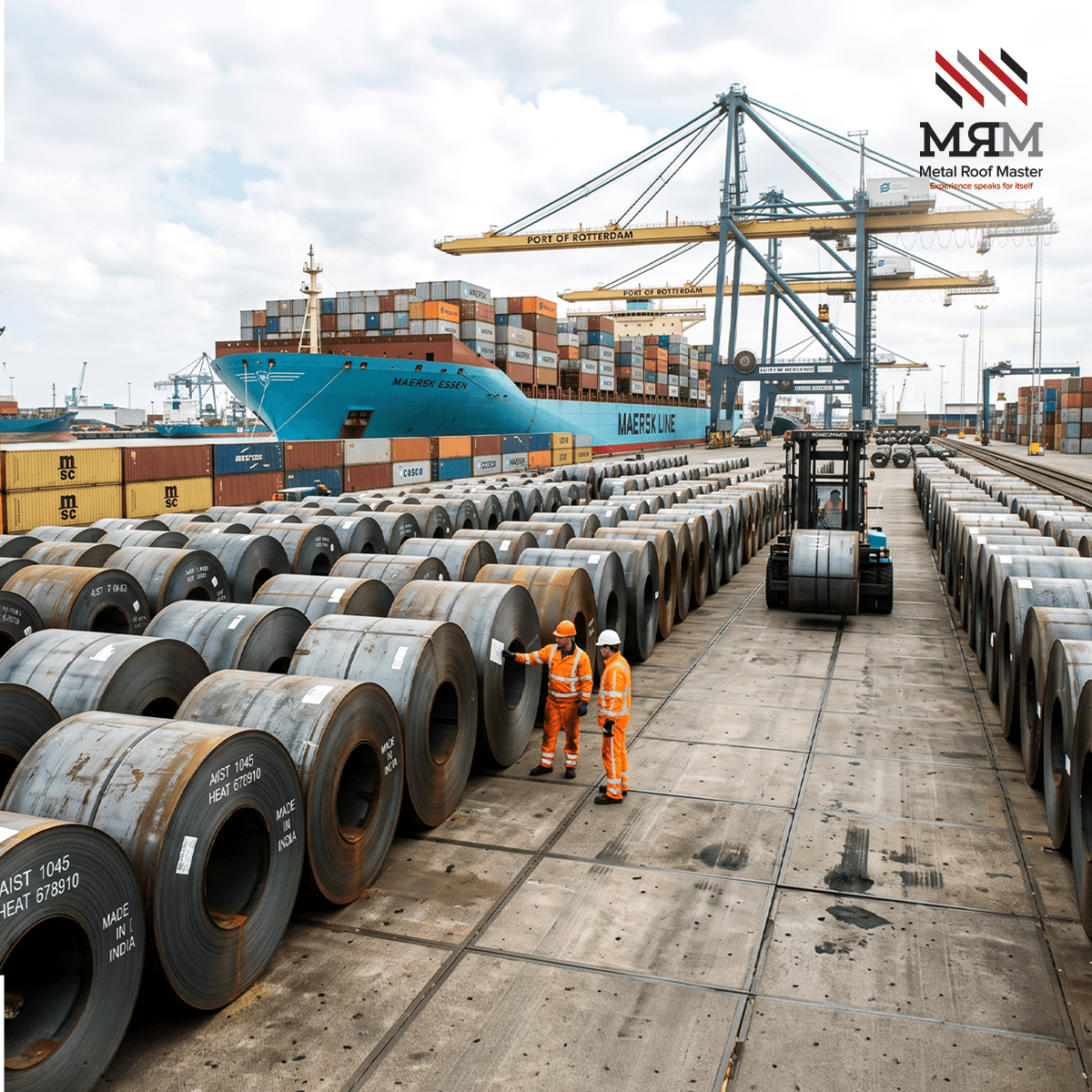
Steel production depends on inputs — iron ore, scrap steel, coking coal, and significant energy consumption — that have their own independent price volatility, which feeds through to finished steel coil pricing.
• Scrap steel prices, a major input for many domestic mills, fluctuate with both global demand and the volume of scrap available in the market at a given time
• Energy costs, particularly natural gas and electricity used in steel processing, can shift meaningfully with broader energy market conditions unrelated to the steel industry itself
• These input costs generally move on a different timeline than tariff policy changes, meaning steel pricing can be affected by multiple independent factors moving simultaneously rather than a single clean cause
Demand Shocks and Seasonal Patterns
Beyond policy and input costs, demand-side factors also move steel pricing, sometimes on a compressed timeline that catches buyers off guard if they're not planning around it.
• Hurricane season in Florida creates a genuine regional demand spike for roofing material immediately before and after major storms, which can tighten availability and firm up pricing during those windows specifically
• Broader construction industry demand cycles, both regionally and nationally, affect overall steel consumption and can shift pricing power between buyers and mills over time
• Global steel demand, particularly from major manufacturing economies, affects the broader commodity market that US domestic pricing doesn't operate entirely independently from
How to Plan a Roofing Project Around Steel Price Volatility
Given how quickly steel pricing can move, a few practical steps can help manage the risk of a project's cost shifting meaningfully between initial quote and final order.
• Ask your supplier how long a quoted price is valid, and get that validity window in writing rather than assuming a verbal quote holds indefinitely
• For larger projects, ask about locking in pricing with a deposit or early material commitment if your timeline allows, rather than waiting until the last possible moment to place an order
• A steel coil supplier in the USA with multiple mill relationships and standing inventory may be better positioned to offer pricing stability than one dependent on a single source or frequent spot-market purchasing
• If your project timeline is flexible, ask your supplier whether current market conditions suggest ordering sooner rather than later, particularly heading into hurricane season when regional demand can spike
How Tariff Rules Get Complicated Fast
The tariff picture isn't a single flat rate applied uniformly — it varies by product classification, country of origin, and specific exemption rules, which is part of why steel pricing can be harder to predict than a simple headline percentage suggests.
• A de minimis exception applies to certain derivative products where the aggregate weight of steel, aluminum, or copper inputs is less than 15% of the total product weight, potentially exempting some finished goods from the full tariff
• Products with a high percentage of US-sourced metal content (the threshold has shifted between 85% and 95% depending on the specific rule version in effect) can qualify for reduced tariff treatment
• Because these classification and content rules can change with new proclamations, a supplier's landed cost for the same nominal product can shift even without a headline tariff rate change, simply due to a rule clarification or reclassification
This complexity is part of why pricing conversations with an experienced supplier matter — someone tracking these rules closely can often explain a price change more precisely than a general "tariffs went up" summary.
Comparing Pricing Volatility to Other Roofing Materials
Steel's price volatility is worth understanding in context: asphalt shingles, while more price-stable in percentage terms, aren't immune to their own petroleum-linked cost swings, and other roofing materials carry their own supply chain considerations. The key difference is that steel's recent volatility has been unusually pronounced and policy-driven, making it a more active planning consideration right now than it might have been in a calmer pricing environment a few years ago.
• Petroleum-based asphalt shingle pricing is linked to oil market conditions, which have their own volatility, though the roofing-specific price swings have generally been less dramatic than steel's recent tariff-driven moves
• Aluminum, another common roofing material, has faced its own significant tariff-driven price increases running in parallel with steel's, meaning coastal buyers considering aluminum aren't escaping volatility by choosing a different metal
Frequently Asked Questions
Why did my metal roofing quote go up since I first got it?
Steel pricing can shift due to tariff policy changes, mill capacity constraints, raw material costs, or demand spikes — all of which can move faster than the timeline between an initial quote and project start, especially over several months.
How much have steel tariffs affected roofing material costs recently?
Section 232 tariffs on imported steel doubled from 25% to 50% in June 2025 and were further restructured in April 2026, contributing to a roughly 20.7% year-over-year increase in steel mill product pricing as of January 2026.
Should I lock in a metal roofing quote as soon as I get one?
Given how quickly steel pricing can shift, asking about your quote's validity window — and considering an early deposit or material commitment for larger projects — can help avoid unexpected cost increases before your project starts.
Does hurricane season affect metal roofing prices in Florida?
Yes, regional demand for roofing material typically spikes immediately before and after major storms, which can tighten availability and firm up pricing during those specific windows.