"Mill-certified" shows up in nearly every metal roofing quote, but the phrase doesn't have a single, universally enforced legal definition the way a specific ASTM standard number does. That gap matters, because it means the term can mean genuinely rigorous documentation from one supplier and very little from another. This guide explains what mill certification should actually involve, and how to tell the difference between a real claim and a marketing phrase.
What Mill Certification Is Supposed to Mean
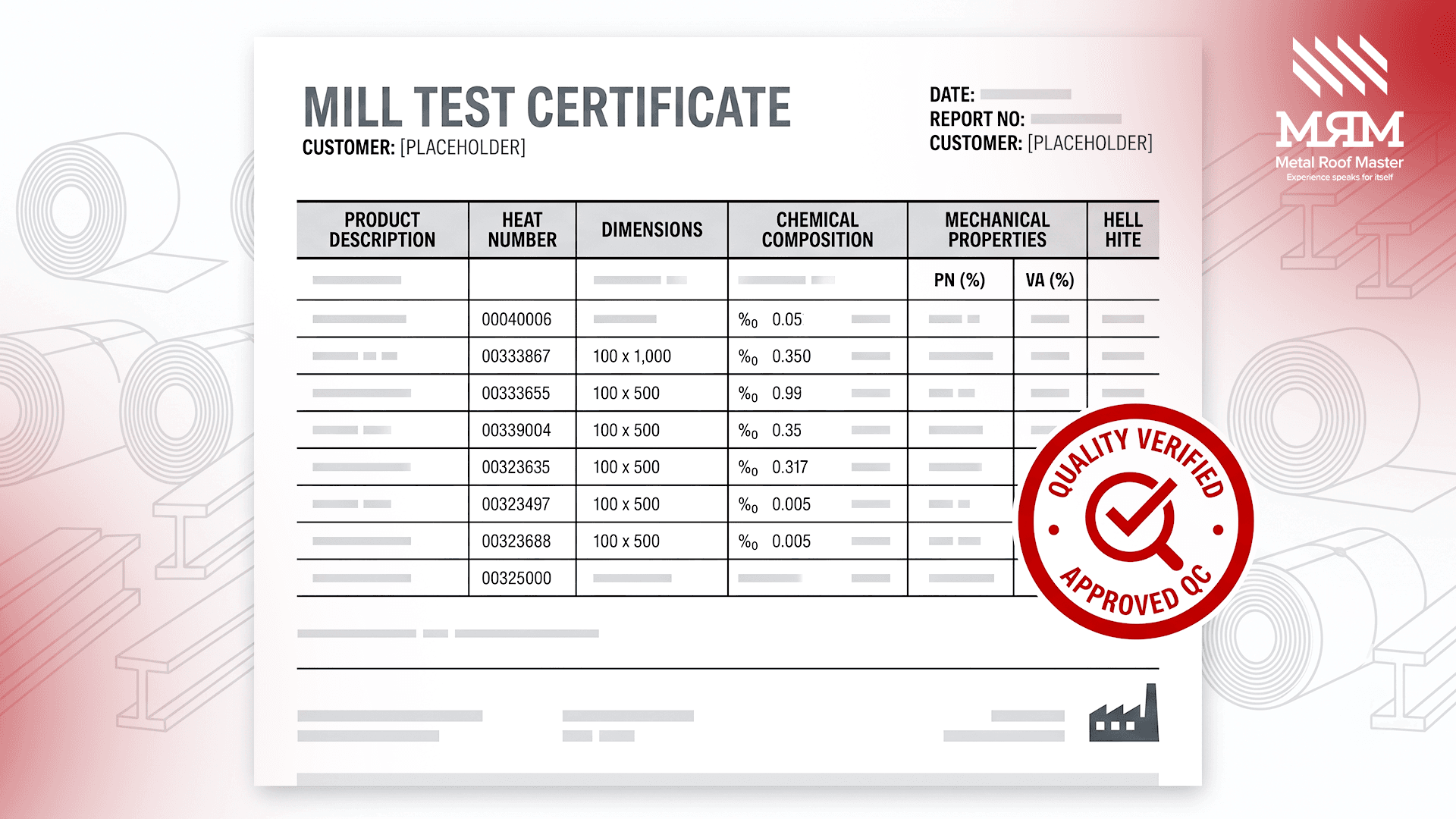
At its core, "mill-certified" means the steel or aluminum coil came with a mill test certificate (MTC) — a document issued directly by the producing mill confirming that a specific production batch meets the chemical composition, coating specification, and mechanical property requirements of a named standard, such as ASTM A653 for galvanized steel or ASTM A792 for Galvalume.
• The certification should be batch-specific, tied to a heat or lot number that traces back to the actual physical material delivered — not a general statement about the mill's typical production quality
• It should reference a specific standard by name and number, not a vague claim like "meets industry standards"
• It should include actual test results, not just a restatement of the specification's minimum requirements without evidence the specific batch was tested against them
Where the Term Gets Used Loosely
Because "mill-certified" isn't a protected or legally defined term, some suppliers use it more loosely than the rigorous definition above suggests — a practice that's easy for buyers to miss if they don't ask for documentation.
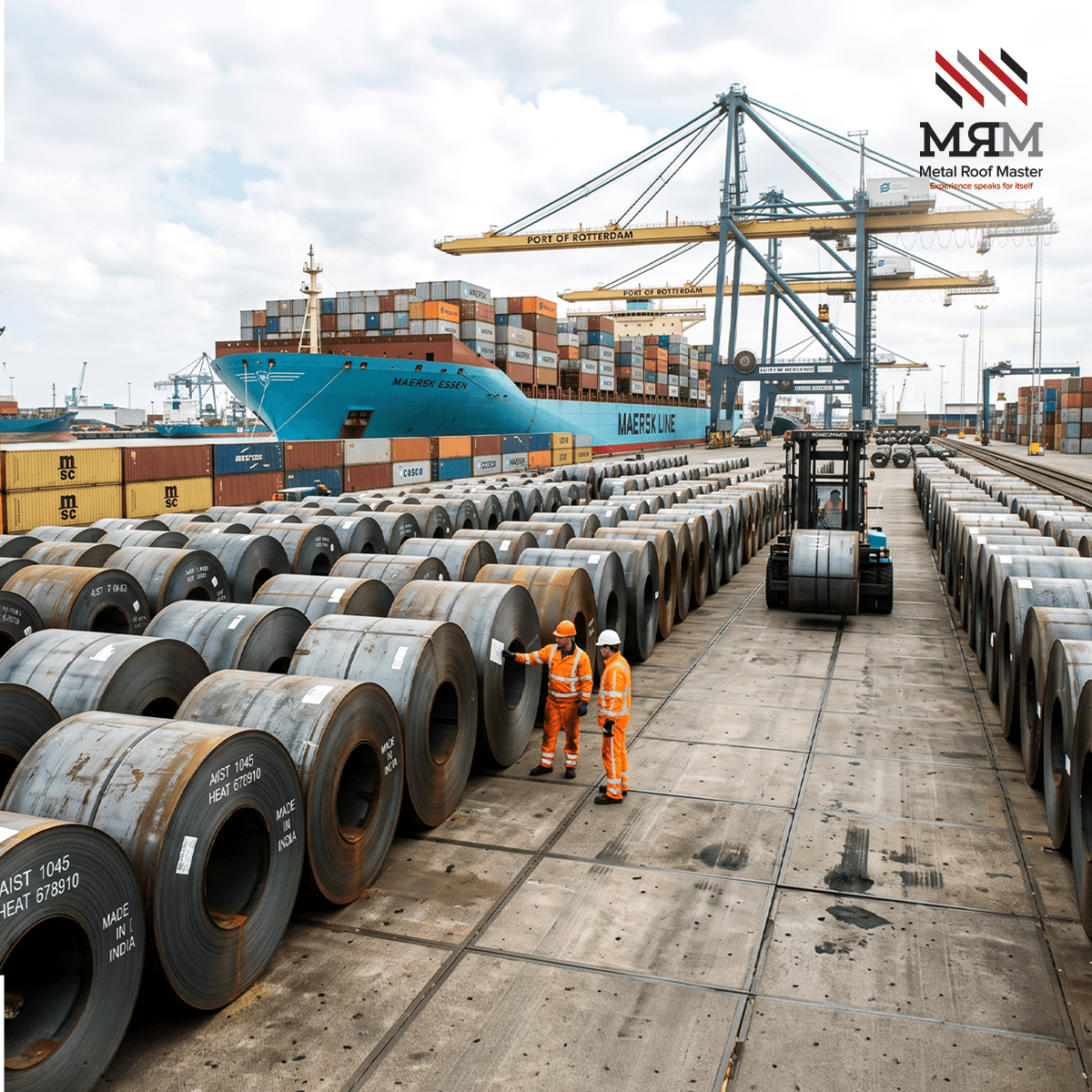
• Some suppliers use the phrase to mean the material originated from a mill (as opposed to a scrap or secondary source) without necessarily providing batch-specific test documentation
• Others may provide a generic specification sheet describing what the standard requires, rather than an actual test certificate confirming the specific delivered batch met those requirements
• In the absence of a request for documentation, a buyer has no practical way to distinguish a supplier making a rigorous claim from one making a loose one — which is exactly why asking matters
What to Actually Ask For
Since the phrase alone doesn't guarantee documentation, the practical solution is to ask directly for the specific paperwork rather than accepting the phrase at face value.
• Request the mill test certificate for your specific order, tied to the heat or lot number of the material being delivered
• Confirm the MTC references the correct specification for your material (A653 for GI, A792 for Galvalume, A1046 for ZAM, A240 for stainless)
• Check that the certificate shows actual test results — chemical composition percentages, coating weight measurements, and mechanical property values — not just a restated specification
• Ask when this documentation will be provided: before delivery, at delivery, or only upon request after the fact. A supplier that includes it as standard practice, unprompted, generally reflects a more consistent quality control process
How This Connects to Overall Supplier Trust
The rigor a supplier applies to mill certification documentation often correlates with how they handle other aspects of a transaction — compliance paperwork, quote accuracy, and post-sale support. It's rarely an isolated practice; a supplier that treats documentation as a routine, standard part of every order tends to apply that same discipline elsewhere in the buying process.
• Suppliers who volunteer documentation without being asked are generally demonstrating a broader quality-control culture, not just checking a box for this one request
• Conversely, a supplier that resists or delays a straightforward documentation request may be signaling gaps in other areas of their process as well
Why This Matters for Your Project
Beyond the diligence of confirming what you're paying for, proper mill certification documentation has practical value that extends well past the initial purchase decision.
• If a roof underperforms its expected service life, documented material specifications make it far easier to determine whether the material itself was a factor, rather than leaving the question unresolved
• Insurance claims involving material failure are considerably easier to substantiate with documented proof of what was actually installed
• Warranty claims against a manufacturer typically require confirming the material matches what the warranty terms specify, which is straightforward with proper documentation and difficult without it
• For projects requiring Miami-Dade NOA compliance, the underlying material's mill certification is often part of the documentation chain supporting the overall product approval, not a separate, disconnected requirement
Mill Certification vs. NOA and Product Approval
It's worth distinguishing mill certification from the other documentation that comes up in Florida roofing purchases, since they verify different things and buyers sometimes conflate them.
• Mill certification documents the raw material's chemical composition and coating specification — it's about what the coil is made of
• A Notice of Acceptance (NOA) or Florida Product Approval documents that a specific finished panel system, including its fastening and installation method, passed wind and water testing as an assembly — it's about how the system performs installed
• Both matter, and they're not substitutes for each other: a properly mill-certified coil formed into a panel system without a valid NOA still can't be legally installed in Miami-Dade's HVHZ, while a panel with a valid NOA but undocumented base material leaves you unable to verify the underlying steel actually matches its stated grade
• A complete documentation package for an HVHZ project should include both: mill certificates for the raw material and NOA or Florida Product Approval documentation for the finished panel system
A Practical Script for Asking Suppliers
If you're not sure how to raise this with a supplier without it feeling like an interrogation, a straightforward, direct approach works best and is a completely normal part of the buying process for any experienced supplier.
• "Can you provide the mill test certificate for this specific order, referencing the heat or lot number?" — a supplier used to this request will have a clear, quick answer
• "Which ASTM (or JIS/EN) standard does this material meet, and does the MTC confirm that specifically?" — this confirms the certificate matches the material you're actually ordering
• "When will I receive this documentation — before delivery, at delivery, or do I need to request it separately?" — this sets expectations and reveals how routine the practice is for that supplier
A supplier who answers these questions readily and specifically is generally demonstrating the kind of consistent documentation practice worth paying for; hesitation or vague answers are worth taking seriously as a signal.
Frequently Asked Questions
Is "mill-certified" a legally defined term?
No. "Mill-certified" isn't a legally protected or standardized term the way a specific ASTM standard number is — its meaning can vary between suppliers, which is why requesting actual documentation matters more than the phrase itself.
What's the difference between a specification sheet and a mill test certificate?
A specification sheet describes what a standard generally requires; a mill test certificate documents the actual test results for a specific production batch, confirming that particular material met those requirements — the certificate is evidence, the spec sheet is a description.
Should I ask for mill certification documentation before or after delivery?
Before or at delivery is best. Verifying material specification after installation is far more difficult, and in many cases practically impossible, without destructive testing of the installed panels.
Does every roofing supplier provide mill test certificates automatically?
Not necessarily. Practices vary — some suppliers provide MTCs as standard practice with every order, while others may only provide them upon specific request. Asking directly, and asking early, is the reliable way to confirm what you'll receive.
Is mill certification the same as NOA compliance?
No. Mill certification documents the raw material's composition and coating specification, while a Notice of Acceptance (NOA) documents that the finished panel system, including its installation method, passed wind and water testing as an assembly — both matter, but they verify different things.
What should I do if a supplier can't answer basic mill certification questions?
Treat hesitation or vague answers as a signal worth taking seriously — an experienced, quality-focused supplier should be able to answer questions about heat numbers, applicable standards, and documentation timing without difficulty.