Steel coil sourced globally can carry certification from any of three major standards bodies — American (ASTM), Japanese (JIS), or European (EN) — and buyers sometimes assume these standards are roughly interchangeable as long as the coating type sounds similar. They're not automatically equivalent, and understanding the differences helps you evaluate a quote referencing an unfamiliar standard rather than assuming it matches what you're used to seeing.
ASTM: The US Standard
ASTM International (originally the American Society for Testing and Materials) publishes the standards most commonly referenced in US roofing and construction projects, including the specifications MRM's own coil products are typically certified against.
• ASTM A653/A653M governs hot-dip galvanized (GI) and galvannealed steel sheet
• ASTM A792/A792M governs 55% aluminum-zinc alloy coated steel sheet (Galvalume)
• ASTM A1046/A1046M governs zinc-aluminum-magnesium alloy coated steel sheet (ZAM)
• ASTM A240/A240M and A480/A480M govern stainless steel plate, sheet, and strip
• For US construction projects, particularly those requiring code compliance documentation like a Miami-Dade NOA, ASTM certification is generally the standard building departments and inspectors expect to see referenced
JIS: The Japanese Standard
The Japanese Industrial Standards (JIS) system, maintained by the Japanese Standards Association, governs steel products manufactured to Japanese specifications — relevant for coil sourced from Japanese mills or manufacturers using Japanese-standard equipment and processes.
• JIS G3323 specifically governs hot-dip zinc-aluminum-magnesium alloy-coated steel sheet and strip — the JIS equivalent covering the same general coating category as ASTM A1046, though not necessarily identical in every technical detail
• JIS standards use their own coating weight and mechanical property classifications, which don't always translate directly to ASTM's designation system without conversion
• Material certified to JIS standards can be a legitimate, high-quality product, but US buyers and building departments may require additional documentation or an ASTM-equivalent certification to satisfy US-specific code and permitting requirements
EN: The European Standard
EN standards, maintained by the European Committee for Standardization (CEN), govern steel products across the European Union and are referenced for coil manufactured to European specifications.
• EN 10346 specifically governs continuously hot-dip coated steel flat products, covering zinc (Z), zinc-iron alloy (ZF), zinc-aluminum alloy (ZA), aluminum-zinc alloy (AZ), and zinc-magnesium alloy (ZM) coatings within a single standard, in thicknesses generally from 0.2mm to 3.0mm
• EN 10346's structure — covering multiple coating types under one standard number, distinguished by coating-type suffix codes — differs organizationally from ASTM's approach of a separate standard number per coating chemistry
• As with JIS, EN-certified material can be excellent quality, but US permitting and code compliance processes are generally built around ASTM references, so EN certification alone may not satisfy US-specific documentation requirements without additional verification
Why These Standards Aren't Directly Interchangeable
Even when two standards cover conceptually similar coatings — ASTM A1046, JIS G3323, and EN 10346's ZM designation all address zinc-aluminum-magnesium coatings, for example — the specific testing methods, coating weight measurement conventions, and mechanical property thresholds can differ in ways that matter for code compliance and warranty purposes.
• A material's actual chemical composition and coating weight might be very similar across standards, but the certification paperwork itself references a specific standard's testing protocol, not a generic performance claim
• US building departments and NOA applications are built around ASTM references specifically — a supplier presenting only JIS or EN documentation for a Miami-Dade project may need to provide additional cross-reference documentation or ASTM-specific testing to satisfy local requirements
• Warranty and liability documentation typically ties back to the specific standard referenced in the sales contract, so mismatched standard references between quote and delivered material documentation are worth catching before, not after, a project starts
How MRM Steel Approaches Multi-Standard Sourcing
Given the reality of global steel sourcing, an asset-light, multi-mill sourcing model — allocating capacity across partner mills and factories rather than depending on a single fixed origin — has a direct advantage: flexibility to source material certified against whichever standard fits a specific project's requirements, with appropriate documentation to bridge the gap when a US project requires ASTM-specific paperwork.
• Multi-mill relationships allow sourcing decisions based on current availability and pricing without being locked into a single country's standards system by default
• For any material sourced under JIS or EN certification destined for a US HVHZ project, confirming the documentation path to ASTM-equivalent compliance should happen before the material ships, not after it arrives
What to Ask When a Standard Looks Unfamiliar
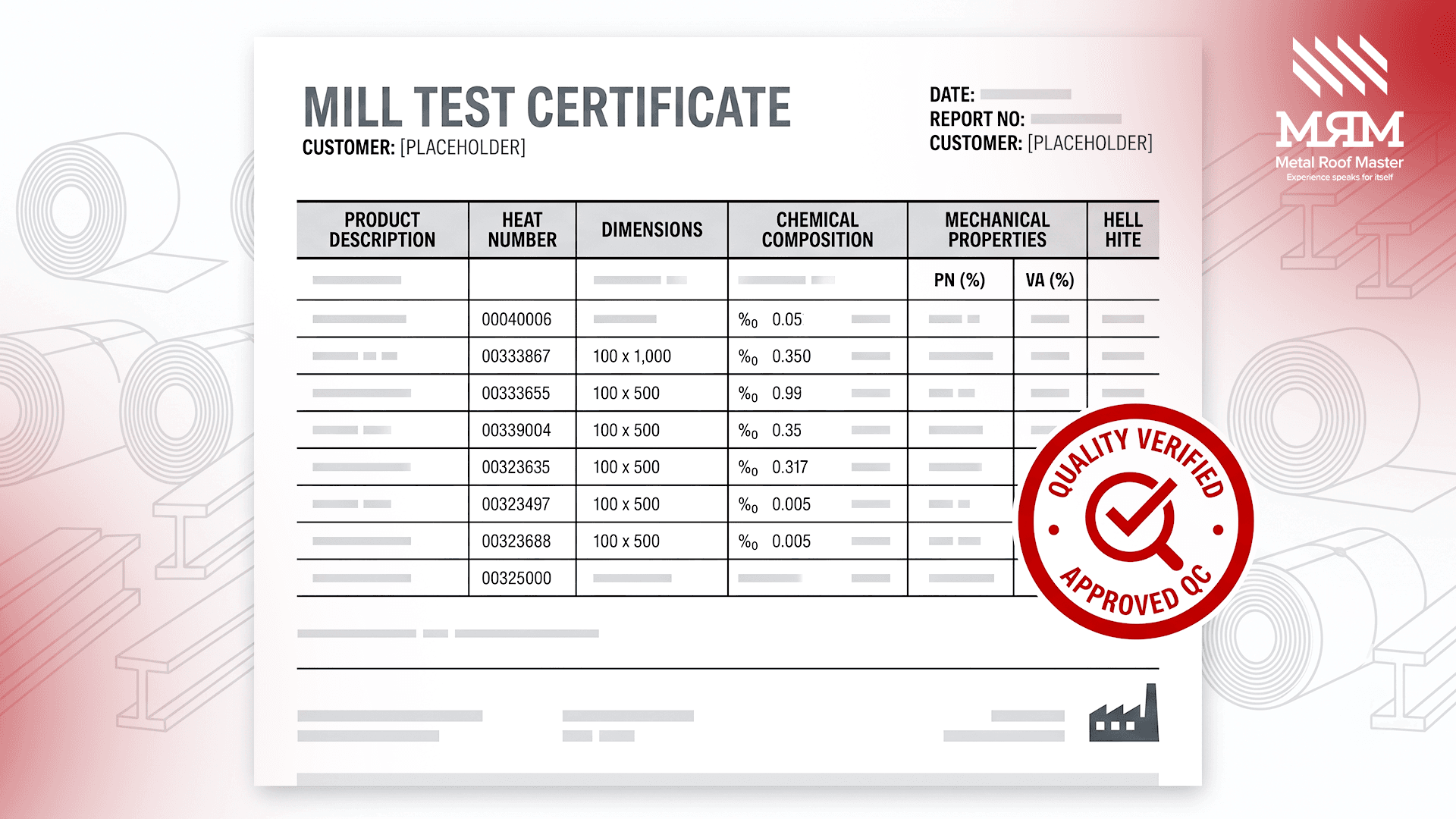
If a quote or mill certificate references a standard you don't recognize, a few direct questions clarify what you're actually getting.
• Ask which standard (ASTM, JIS, or EN) the material is certified against, and request the specific standard number
• For US construction projects, ask whether the material also carries or can be cross-referenced to an equivalent ASTM certification, particularly if Miami-Dade NOA compliance is required
• If working with an international supplier sourcing under JIS or EN, ask about their process for satisfying US documentation requirements — this is a common, solvable situation for suppliers experienced in international sourcing, not a dealbreaker
A Practical Example: Comparing Galvalume-Type Coatings
Looking at one coating family across all three standards illustrates how the differences show up in practice. Aluminum-zinc alloy coatings — marketed as Galvalume in the US — appear in all three systems, but under different names and classification details.
• ASTM A792/A792M: covers 55% aluminum-zinc alloy coated steel sheet specifically, with US-standard coating weight designations
• EN 10346: covers the equivalent coating under the "AZ" (aluminum-zinc) designation, part of the broader multi-coating EN 10346 standard rather than a dedicated standard number
• Even though both standards address materially similar coating chemistry, the specific test methods for coating adhesion, coating mass measurement, and mechanical properties are defined independently within each standard, meaning a mill certificate referencing one doesn't automatically satisfy documentation requirements written around the other
This is why a direct "is EN equivalent to ASTM" question rarely has a simple yes-or-no answer — the coatings can be materially very similar while the certification paperwork itself remains standard-specific.
Why This Matters More for International Sourcing
As more roofing material moves through global supply chains — coil manufactured under JIS or EN standards, then finished or distributed in the US — standard mismatches come up more often than they did when sourcing was more regionally contained. This is a normal and manageable part of international trade, not a red flag by itself, but it does mean buyers need to ask more specific questions than they might with a purely domestic supply chain.
• Experienced international suppliers and trading houses typically maintain relationships across multiple standards systems and can provide cross-reference documentation or dual certification where needed
• For projects with strict code compliance requirements (like Miami-Dade HVHZ permitting), confirming ASTM-equivalent documentation early in the sourcing process avoids delays discovered later during permitting review
Frequently Asked Questions
Is JIS-certified steel the same quality as ASTM-certified steel?
JIS-certified steel can be equally high quality, but the certifications aren't automatically interchangeable — the specific testing methods and classification systems differ, and US code compliance documentation is generally built around ASTM references specifically.
Can I use EN-certified steel coil for a Miami-Dade roofing project?
It's possible, but Miami-Dade's NOA process and US building department requirements are generally built around ASTM standard references, so EN-certified material may need additional documentation or ASTM-equivalent testing to satisfy local permitting requirements.
What's the US equivalent to JIS G3323 for ZAM coating?
ASTM A1046/A1046M is the US standard covering zinc-aluminum-magnesium alloy coated steel sheet, addressing a similar coating category to JIS G3323, though the two aren't automatically identical in every technical detail.
Does EN 10346 cover the same coatings as ASTM in one standard?
Yes, EN 10346 covers multiple coating types (zinc, zinc-iron, zinc-aluminum, aluminum-zinc, aluminum-silicon, and zinc-magnesium) within a single standard number using suffix codes, whereas ASTM typically publishes a separate standard number for each coating chemistry.
Should I be concerned if my supplier sources material internationally under different standards?
Not necessarily — this is a normal part of global steel sourcing. The key is confirming your supplier can provide appropriate documentation (ASTM-equivalent certification or cross-reference testing) for whatever code compliance your specific project requires.