"Country of origin" for steel used to be a relatively simple concept — generally, where the product last underwent substantial transformation before export. Since late 2024, US Customs and Border Protection has required a more specific and consequential piece of documentation: the country of melt and pour, which directly determines a steel product's tariff exposure regardless of where it was subsequently processed or shipped from. This distinction matters more for roofing material buyers than the terminology might suggest.
What "Country of Melt and Pour" Actually Means
Country of melt and pour (COM) refers to the specific location where raw steel is first produced in a steelmaking furnace in liquid form and then poured into its initial solid shape — slabs, billets, or ingots. This is documented on mill test certificates generated during production, and it can be different from where the steel was later rolled, coated, cut, or finished into a final product.
• A coil finished and coated in one country can still trace its melt and pour origin to a completely different country, and that original melt-and-pour location — not the finishing location — is what US Customs requires for tariff reporting
• Mandatory reporting of the ISO country code for melt and pour became effective for steel imports from all countries starting November 21, 2024, documented through mill test certificates submitted electronically with the import entry
• If the specific melt-and-pour country can't be documented, importers must use an "OTH" (Other) code, but the goods will not qualify for any origin-based exemption from Section 232 duties in that case
Why This Documentation Requirement Exists
The melt-and-pour reporting requirement was implemented specifically to close a loophole where steel produced in a country facing tariffs or trade restrictions could be shipped to a third country for minor processing, then exported to the US under that third country's more favorable trade status — a practice sometimes called tariff circumvention or transshipment.
• By tracing tariff eligibility back to the actual melt-and-pour origin rather than the last country of processing, this requirement makes it considerably harder to obscure a product's true origin through intermediate processing steps
• Similar melt-and-pour or smelt-and-cast documentation requirements have been adopted internationally as well, including by Canada and the European Union, reflecting a broader global trend toward this kind of origin traceability for steel and aluminum
• The European Union's own steel regulation, which entered into force July 1, 2026, applies a similar melt-and-pour verification requirement, with stricter documentation standards phasing in through 2027
What This Means Practically for a Roofing Buyer
For someone sourcing roofing coil or finished panels, this documentation requirement affects both pricing transparency and the reliability of any origin-based claims a supplier makes about their material.
• A supplier's claim that material is "made in" a specific country needs to be understood alongside the more specific melt-and-pour documentation, since the two aren't necessarily the same thing under current customs reporting requirements
• Ask your supplier whether they can provide melt-and-pour documentation alongside standard mill test certificates, particularly for imported material where tariff treatment depends on this specific origin data
• A multi-mill sourcing strategy — spreading purchases across mills in multiple qualifying countries — gives suppliers more flexibility to manage tariff exposure than depending on a single origin that could face a rate change or a new trade action
A Practical Example
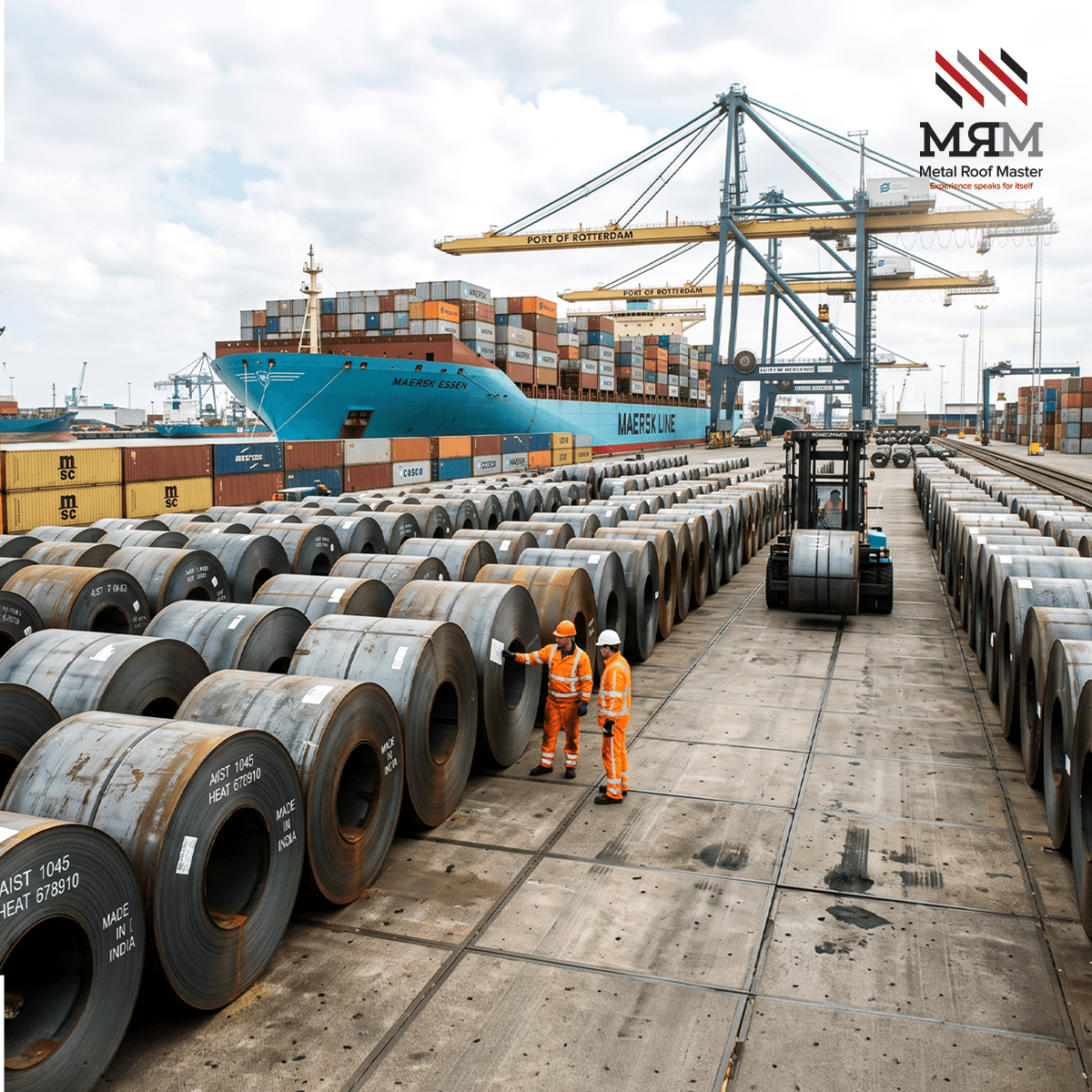
Consider a coil that is melted and poured in one country, shipped to a second country for hot-dip Galvalume coating, then exported to the US as a finished, coated product. Under current rules, the tariff treatment traces back to the first country — the melt-and-pour origin — not the second country where the coating and finishing actually happened, even though a general made-in label might reasonably reference the finishing location.
• This means two visually identical coils, both coated in the same country, could face different tariff rates if their underlying melt-and-pour origins differ — a distinction invisible without the specific mill documentation
• This is precisely why a general country-of-origin claim on a product data sheet isn't sufficient documentation for accurately predicting or verifying its tariff-driven cost
Documentation to Ask For
Given how directly this origin data affects tariff-driven pricing, buyers working with suppliers who source internationally have a reasonable basis to ask for specific supporting documentation.
• Mill test certificates that specifically identify the country of melt and pour, not just a general country-of-origin statement
• Confirmation of which specific tariff treatment (standard Section 232 rate, exemption, or a specific trade agreement provision) applies to your material based on its documented origin
• For large or ongoing orders, ask whether your supplier's sourcing mix has changed recently in response to tariff developments, since origin — and therefore pricing — can shift between orders even from the same supplier
How This Differs From Traditional Country-of-Origin Marking
Traditional country-of-origin marking requirements, which have existed for decades, generally focus on where a product underwent its last "substantial transformation" before reaching the US market — a different, often less specific standard than melt-and-pour tracing.
• Substantial transformation rules can allow a product to be marked as originating from the country where it was significantly processed, even if raw materials came from elsewhere
• Melt-and-pour reporting is a narrower, steel-specific requirement layered on top of general origin marking rules, specifically for tariff calculation purposes rather than general consumer labeling
• This means a product could technically satisfy general country-of-origin marking requirements based on where it was finished, while still facing tariff treatment based on a completely different melt-and-pour origin — understanding this distinction avoids confusion when comparing supplier claims
International Alignment on Origin Traceability
The US isn't alone in tightening steel origin documentation — this reflects a broader international trend worth understanding if you're evaluating suppliers who source globally.
• Canada's Border Services Agency implemented similar country of melt and pour reporting requirements, with documentation standards tightening further in September 2025 to require producer-issued certificates rather than accepting commercial invoices alone as proof
• The European Union's Steel Regulation, in force since July 2026, applies comparable melt-and-pour verification, with free-of-duty quotas set at defined tonnage levels and a 50% duty applying above those quotas
• This international alignment suggests melt-and-pour traceability is becoming a durable feature of global steel trade rather than a temporary US-specific policy, worth factoring into long-term sourcing relationships rather than treating as a passing requirement
Frequently Asked Questions
What is "country of melt and pour" for steel?
It's the specific location where raw steel was first produced in liquid form and poured into its initial solid shape (slabs, billets, or ingots) — this can differ from where the steel was later processed, coated, or finished, and it's what determines current US tariff treatment.
Why does melt and pour matter more than where a product was last processed?
US Customs implemented melt-and-pour reporting specifically to prevent circumventing tariffs by processing steel from a tariffed country in a third country before export — tracing origin back to the actual melt-and-pour location closes that loophole.
Can a supplier avoid tariffs by processing steel in a different country than where it was made?
Not under current rules — melt-and-pour reporting requirements specifically trace tariff eligibility back to where the steel was originally produced, regardless of where subsequent coating, cutting, or finishing occurred.
Is country of melt and pour the same as general country-of-origin marking?
No. General country-of-origin marking often focuses on where a product underwent its last substantial transformation, while melt-and-pour reporting specifically traces steel back to where the raw metal was first produced, regardless of subsequent processing location — a product can satisfy one standard while a different origin applies under the other.
Are other countries adopting similar steel origin tracking requirements?
Yes. Canada and the European Union have both implemented comparable country of melt and pour or smelt and cast documentation requirements, suggesting this kind of origin traceability is becoming a lasting feature of global steel trade rather than a temporary US policy.