Contractors and fabricators ordering steel coil in volume quickly discover that pricing isn't a simple linear discount — order twice as much, pay proportionally less per unit. Volume pricing involves tiered thresholds, minimum order quantities, and timing considerations that affect the actual per-unit cost in ways that aren't always obvious from a quick quote. This guide breaks down how bulk roofing material pricing actually works.
Why Volume Pricing Exists
Steel mills and suppliers structure pricing in tiers because larger orders reduce their per-unit costs in several ways: production runs become more efficient, shipping and handling costs spread across more material, and administrative overhead per order stays relatively fixed regardless of order size.
• Setting up a production run for coil coating or roll-forming has largely fixed costs regardless of quantity, so spreading that cost over more material lowers the per-unit price
• Freight costs for a full truckload or container are more efficient per unit than smaller, partial shipments
• Suppliers can offer better pricing when a larger order helps them plan mill allocation and inventory more predictably, rather than absorbing the uncertainty of many small, unpredictable orders
Understanding MOQ (Minimum Order Quantity)
Before volume discounts even enter the conversation, most coil products have a minimum order quantity (MOQ) — the smallest volume a supplier or mill will produce or sell for that specific product. MOQs vary significantly by material and coating type.
• Standard Galvalume coil often carries MOQs in the range of a few thousand square feet, while more specialized coatings like ZAM or premium color-coated finishes can carry higher minimums given more specialized production runs
• Orders below the MOQ threshold either aren't available at all from a given supplier, or come with a significant per-unit price premium reflecting the inefficiency of a smaller-than-standard production run
• For smaller contractors or one-off residential projects, working with a supplier who maintains standing inventory (rather than requiring a fresh mill run for every order) can make below-MOQ quantities practical without the premium associated with a custom small batch
How Pricing Tiers Typically Work
Beyond the MOQ threshold, most suppliers structure additional discounts at defined volume breakpoints, though the specific thresholds and discount percentages vary by supplier and material.
• A typical structure might offer a baseline price at MOQ, a modest discount at a mid-volume tier (e.g., a full truckload), and a larger discount for the highest volume tier (e.g., multiple truckloads or a full container for export)
• Discounts generally aren't linear — the difference between the top two tiers is often smaller in percentage terms than the difference between the lowest and middle tiers, since the efficiency gains diminish somewhat at very high volumes
• Because these thresholds and discounts vary by supplier, comparing volume pricing structures side by side (not just headline per-unit prices) helps identify which supplier's tier structure actually fits your typical order size
Timing and Market Conditions Affect Bulk Pricing Too
Volume pricing doesn't exist in isolation from the broader steel market — the underlying commodity price volatility discussed in our guide on why steel prices change suddenly affects bulk quotes just as much as smaller orders, sometimes more, since a locked-in bulk price carries more risk for a supplier if the market moves significantly before the order ships.
• Suppliers may be less willing to lock in long-validity bulk pricing during periods of high market volatility, since their own cost exposure increases with order size
• For large or recurring orders, discussing pricing structure and validity windows directly with your supplier — rather than assuming a quoted bulk rate holds indefinitely — helps avoid surprises
Practical Tips for Contractors and Fabricators
A few practical approaches can help contractors and fabricators get the most favorable volume pricing without over-committing to more material than a project actually needs.
• Consolidate orders where practical — combining multiple smaller projects into a single larger order can move you into a better pricing tier, if your storage and cash flow allow it
• Ask your supplier directly what volume threshold triggers the next pricing tier — sometimes a modest increase in order size unlocks a meaningfully better rate
• For recurring project types (like a fabrication shop regularly ordering the same gauge and coating), discuss a standing volume agreement rather than negotiating pricing fresh on every individual order
• Balance volume discounts against storage costs and cash flow — the per-unit savings from a larger order aren't worthwhile if the excess material sits unused for months, tying up capital and storage space
Volume Pricing for Export and International Orders
International buyers and export partners typically deal with an added layer of volume considerations, since ocean freight economics favor full container loads (FCL) far more dramatically than domestic truckload shipping does.
• A full container load generally offers meaningfully better per-unit freight economics than a less-than-container-load (LCL) shipment, on top of any material-only volume discount
• Export orders often bundle material and compliance documentation (commercial invoice, packing list, certificate of origin, bill of lading) as part of the standard process — confirming this is included, not a separate cost, is worth clarifying upfront
• For distributors and EPC contractors ordering regularly from the same supplier, establishing a standing relationship with predictable order cadence can support more favorable terms than one-off bulk orders negotiated fresh each time
How to Compare Volume Quotes Across Suppliers
When comparing bulk quotes from multiple suppliers, looking only at the final per-unit price can miss important differences in what that price actually includes.
• Confirm whether the quoted price includes freight, or whether that's calculated separately — a lower per-unit material price with expensive freight can end up costing more overall than a slightly higher price with efficient logistics included
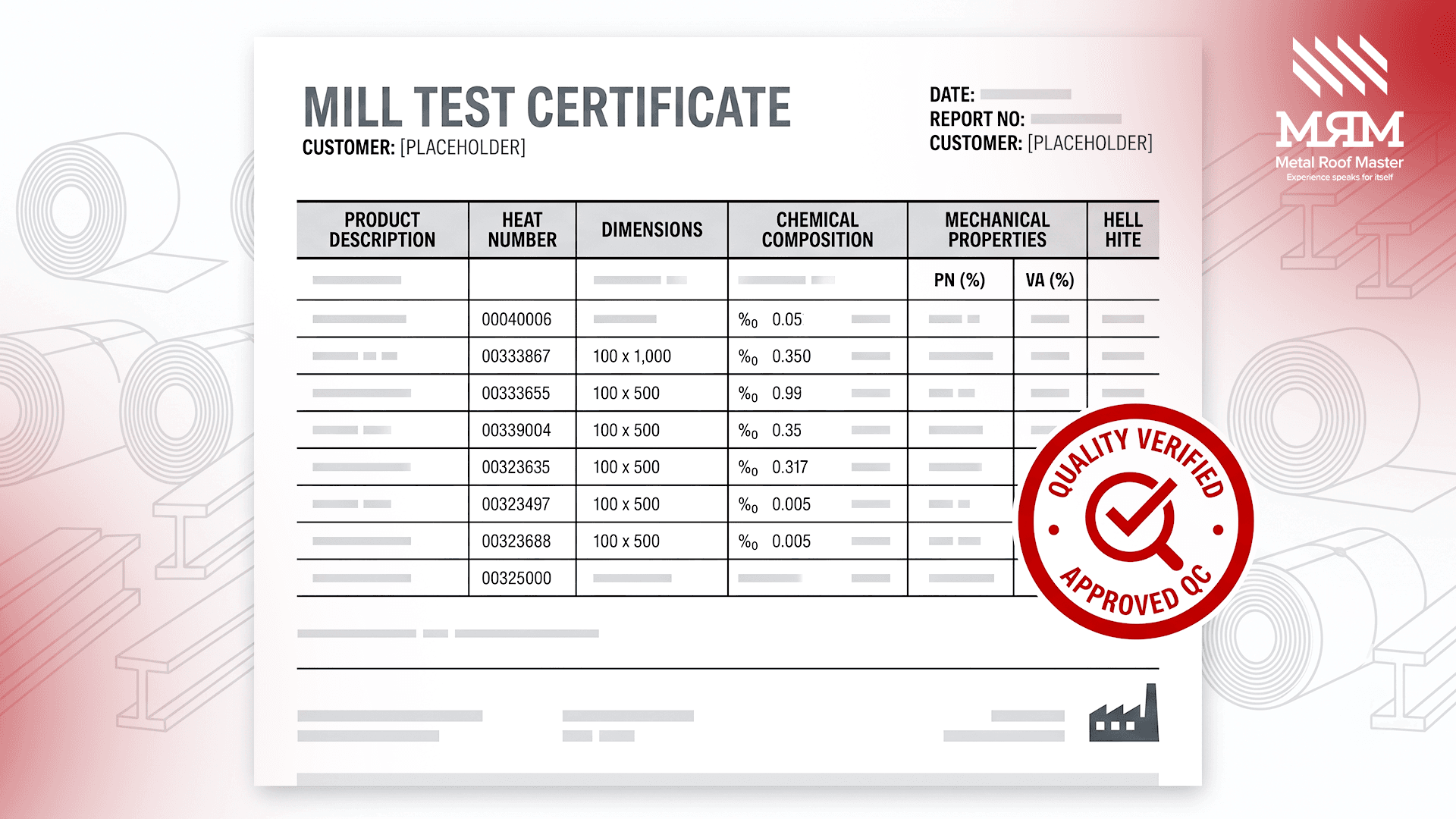
• Check whether mill certification and compliance documentation are included as standard, or represent an additional cost or delay if requested separately
• Ask about the specific volume threshold for the quoted tier, and what the price would be one tier up or down — this reveals how the supplier's overall pricing structure is built, not just the single number for your current order size
Frequently Asked Questions
What is MOQ in steel coil pricing?
MOQ (Minimum Order Quantity) is the smallest volume of a specific coil product a supplier or mill will produce or sell — orders below this threshold either aren't available or come with a significant per-unit price premium.
Is volume pricing always a linear discount?
No. Volume pricing typically follows tiered thresholds rather than a smooth linear scale, and the discount percentage between higher tiers is often smaller than between lower tiers, since efficiency gains diminish somewhat at very high volumes.
Does market volatility affect bulk steel pricing more than small orders?
It can. Suppliers carry more cost exposure on larger locked-in orders during volatile market periods, which sometimes makes them less willing to offer long price-validity windows on bulk quotes compared to smaller, faster-turnaround orders.
Should a small contractor bother asking about volume pricing?
Yes — even below typical bulk thresholds, it's worth asking your supplier what volume would trigger a better rate, and whether consolidating multiple smaller projects into one order could help you reach that threshold.
Does a full container load always cost less than a partial shipment?
Generally yes, on a per-unit basis — full container loads offer meaningfully better freight economics than less-than-container-load shipments, which is worth factoring into export order planning alongside material-only volume discounts.
What should I check besides the per-unit price when comparing bulk quotes?
Confirm whether freight and compliance documentation are included in the quoted price, and ask what the pricing would look like one tier above or below your current order size to understand the supplier's overall pricing structure.