Search for "does metal roofing increase resale value" and you'll find cost-recovery figures ranging from roughly 48% to over 90%, depending on the source and year. That's a wide enough spread to be genuinely confusing, and it's worth understanding why the numbers vary so much before treating any single figure as a reliable prediction for your specific home.
Where These Numbers Actually Come From
The most frequently cited data source for roofing resale value is the annual Cost vs. Value Report (published by Zonda/Journal of Light Construction, and known for years as Remodeling Magazine's report), which surveys real estate agents on estimated resale value contribution for standardized renovation projects, then compares that estimate to average project cost.
• Recent editions of the Cost vs. Value Report have shown metal roofing recovering roughly 48% to 61% of its installed cost at resale, varying by year and region — figures that are notably lower than some marketing claims citing 85-95% recovery
• The National Association of Realtors' Remodeling Impact Report, a separate annual survey, has recognized new roofing generally (not metal specifically) as one of the higher-scoring projects for both realtor-recommended pre-listing improvements and homeowner satisfaction
• Older or less rigorously sourced statistics citing very high metal-roofing-specific ROI (85-95%) trace back to more limited, less broadly representative studies and should be weighed against the more consistently updated Cost vs. Value data
Why the Numbers Vary So Much
Beyond simply citing different studies, several real factors explain why metal roofing's resale contribution genuinely varies by property and market, not just by which report you happen to read.
• Cost vs. Value methodology estimates resale contribution against average job cost — a well-negotiated, efficiently sourced metal roof project can outperform the average cost basis used in the survey, improving the effective ROI
• Regional buyer expectations matter significantly — in hurricane-prone, hail-prone, or extreme-climate markets, buyers and appraisers often place a higher premium on a durable roof than in milder climates where roofing material draws less buyer attention
• An older, worn, or storm-damaged existing roof creates more resale upside from a new metal roof simply by removing a visible negative that would otherwise concern buyers or trigger inspection contingencies
• A brand-new roof of any material tends to score well with buyers and inspectors alike; metal's specific premium over an equally new asphalt roof is generally smaller than metal's premium over an aging or damaged roof of any type
Value Beyond the Sale Price Number
Resale contribution captured in a Cost vs. Value survey doesn't fully capture every way a metal roof affects a home's value and marketability, some of which matter more in specific circumstances than a general resale percentage suggests.
• Insurance cost reduction through wind-mitigation credits is a real ongoing financial benefit that isn't reflected in the sale price itself, but affects a buyer's total cost of ownership and can be a selling point during negotiations
• A documented, code-compliant metal roof can simplify a buyer's insurance underwriting process, which has become an increasingly significant factor in Florida home sales as insurers scrutinize roof age and material more closely
• Removing the "roof replacement" variable from a buyer's near-term budget planning — since a well-installed metal roof won't need replacement for decades — can be a meaningful selling point independent of the appraised dollar contribution
• Faster time-on-market is sometimes reported anecdotally by agents for homes with new, visibly well-maintained roofing, though this is harder to quantify precisely than a direct cost-recovery percentage
A Note on Timing Your Decision
If resale timing is a genuine factor in your roofing decision, the calculation shifts depending on how soon you plan to sell. A roof installed immediately before listing captures the resale contribution but none of the ownership-period benefits (insurance savings, avoided maintenance) that make metal roofing's case stronger over a longer horizon.
• Selling within a year or two: resale contribution and buyer confidence impact matter most; a lower-cost, code-compliant option may make more financial sense than a premium coated system if the goal is purely transactional
• Selling in five-plus years: ownership-period benefits (insurance savings, avoided replacement) become a larger part of the total value equation, potentially justifying a higher-tier material even if the resale-only math looks similar
What This Means If You're Deciding Whether to Install Metal Roofing
If resale value is a significant factor in your roofing decision, treating any single cited percentage as a guarantee is a mistake — the realistic range based on current Cost vs. Value data suggests recovering roughly half to two-thirds of installed cost through the sale price alone, with additional value coming from insurance savings and buyer appeal that isn't captured in that number.
• If you're planning to sell within the next few years, weigh the resale contribution against your local market's buyer expectations and current roof condition rather than a generic industry-wide percentage
• If you're planning to stay long-term, the resale question matters less than the direct benefits of lifespan, insurance savings, and storm performance covered in our related cost-comparison guide
• A local real estate agent familiar with your specific neighborhood can offer more relevant insight into buyer expectations than a national average, particularly in markets where metal roofing is either unusually common or unusually rare
Metal Roofing Compared to Other Exterior Improvements
Putting metal roofing's resale contribution in context alongside other common exterior improvements helps calibrate expectations — roofing generally recovers a smaller percentage of cost than smaller curb-appeal projects, even though it scores well on realtor recommendations and buyer satisfaction.
• Smaller, less expensive projects like a new steel front door or garage door replacement often show higher percentage cost recovery than a full roof replacement, simply because the absolute dollar cost is much lower relative to the perceived value boost
• Despite a moderate percentage recovery, new roofing consistently ranks among realtors' top pre-listing recommendations and among the highest homeowner "Joy Score" projects in NAR's Remodeling Impact Report, reflecting its importance to buyer confidence even when the pure dollar-for-dollar math is less favorable than smaller projects
• This distinction — moderate cost recovery but high buyer confidence impact — is worth keeping in mind: a new roof (metal or otherwise) often functions more as a deal-enabler that prevents a sale from stalling over inspection concerns than as a straightforward value-adding upgrade
Standing Seam vs. Other Metal Panel Styles for Resale
Within metal roofing itself, panel style can affect how a roof is perceived by buyers and appraisers, even though most cost-recovery studies don't break out this level of detail.
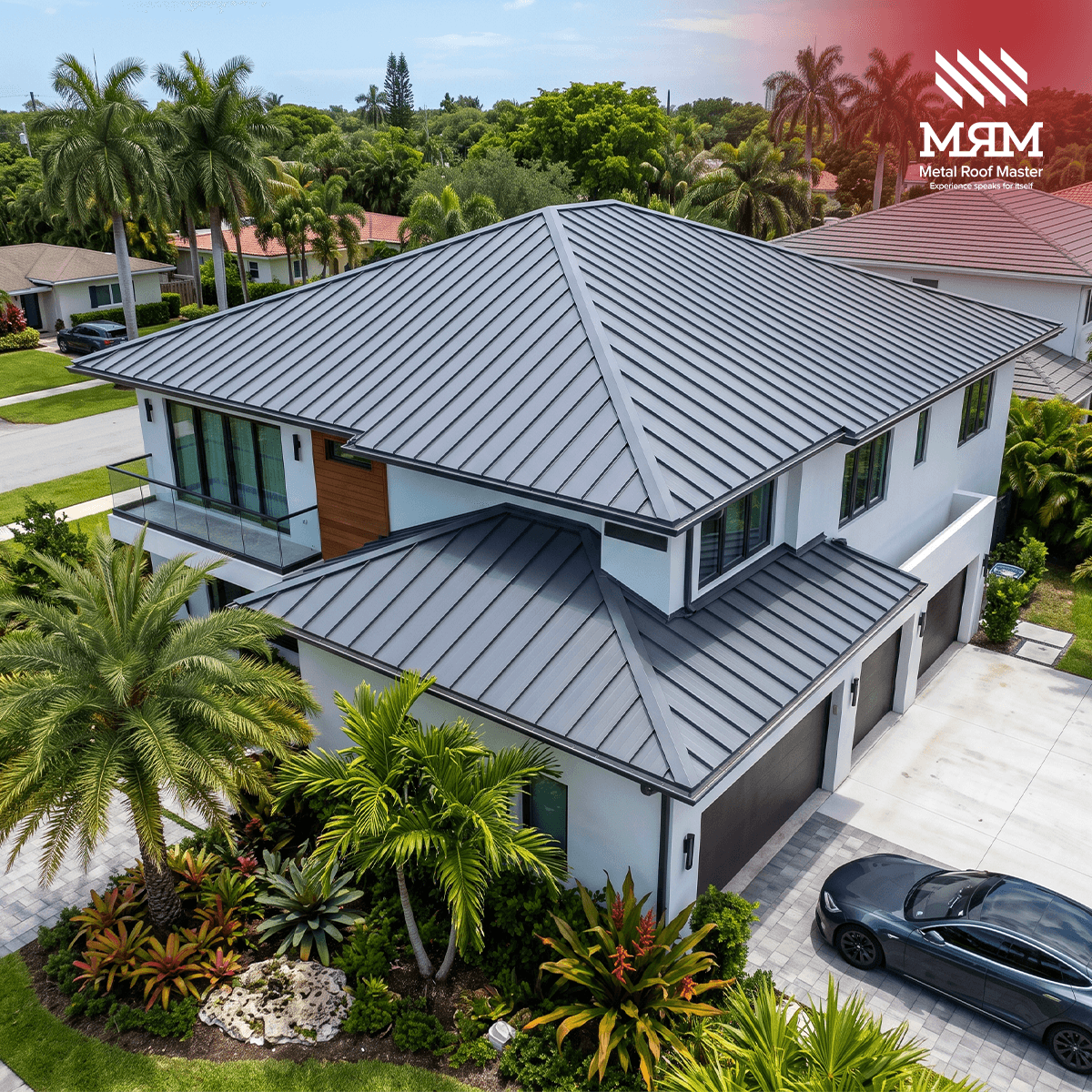
• Standing seam's clean, architectural appearance is generally viewed more favorably by buyers than exposed-fastener corrugated panels, which can read as more utilitarian or agricultural in a residential context
• Premium coated finishes in colors that complement the home's overall design tend to support stronger buyer appeal than a purely utilitarian metal finish, even if both offer comparable underlying performance
• An appraiser's assessment typically focuses more on material category, condition, and age than on the specific panel style, meaning the resale appeal difference between panel styles is more about buyer perception during showings than formal appraisal value
Frequently Asked Questions
What percentage of metal roof cost do you recover at resale?
Recent Cost vs. Value Report data suggests roughly 48% to 61% of installed cost is recovered through resale value contribution, though this varies by year, region, and the specific condition of the home's prior roof.
Why do some sources claim metal roofs recover 85-95% of cost at resale?
Those figures generally trace back to older or more limited studies rather than the more consistently updated Cost vs. Value Report data, which is the most frequently cited and broadly representative source for renovation resale contribution figures.
Does a metal roof's resale value differ by region?
Yes. Buyers and appraisers in hurricane-prone, hail-prone, or extreme-climate markets often place a higher value on a durable roof than buyers in milder climates, which can meaningfully affect a metal roof's actual resale contribution in your specific market.
Does standing seam metal roofing have better resale appeal than corrugated panels?
Generally yes for residential properties — standing seam's clean, architectural appearance tends to be viewed more favorably by buyers than exposed-fastener corrugated panels, which can read as more utilitarian in a residential context, though appraised value focuses more on material category and condition.